TOIL is the curse of Sisyphus
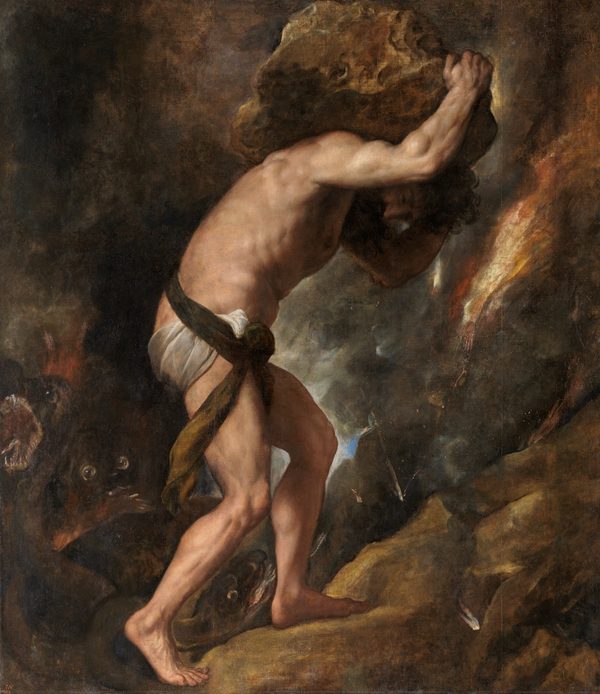
Every SRE knows this painting. The boulder that rolls back down. The work that returns. The fix that breaks again.
In 2023, our TOIL hit 59.7%. Engineers were drowning. The industry was reporting 82% burnout rates. And then came the third merger in four years. Every acquisition erased progress. Every reorganization killed momentum. We were building on sand.
What if the problem isn’t change, but our resistance to it?
Most organizations fight change. They build rigid structures, then watch them shatter.
Water doesn’t break when you pour it into a new container. It takes a new shape. The water remains water.
Coltrane’s Equinox, badly played
Brussels, 2010. I was learning saxophone. My friend Ivo was learning bass. We attempted Coltrane’s Equinox with a drummer who was the only competent musician among us. We failed spectacularly.
But that failure taught me something: jazz doesn’t work when everyone plays their part in isolation. It works when musicians listen, adapt, respond. The sheet music is just a starting point. The real music happens in the spaces between the notes.
I still don’t play Equinox properly. But I’ve spent 5+ years applying its lesson to organizations.
We built an idempotent organization
Traditional organizations seek stability like mitochondria: frozen, efficient, incapable of evolution. They sacrificed adaptability two billion years ago. Most management theory asks you to do the same. We rejected that.
Luhmann taught us that systems survive by maintaining boundaries, not by freezing structures. The boundary is what matters, not the components inside it. Olivetti taught us that efficiency without dignity is just exploitation with better metrics.
We built an idempotent organization: stable practices that people flow through. Run the same operation twice, get the same result. The capability persists. The individuals rotate. The humans keep their dignity.
Three mergers, zero knowledge loss
| Cycle | Years | The Test |
|---|---|---|
| I | 2019–2021 | Origin lab. Proved 68% interrupt reduction. |
| II | 2021–2022 | First merger. Would the culture transfer? It did. |
| III | 2022–now | Two more mergers. 59.7% → 44.7% TOIL. It held. |
Each merger was supposed to destroy us. Each one made us stronger. The framework didn’t just survive adversity — it was designed for adversity.
Statistical significance: p < 0.001
TOIL measured against Google SRE’s six-point definition; cycle times from 25,498 tickets across three boards (2020–2025). Full methodology in the Narrative.
How it works
What practitioners said
The gatekeeping practice was the focus of the SREday Munich Q2 2026 talk on 2026-05-21.
Get the full story
The narrative. The jazz lessons. The lived experience.